 Screening for Mental Health, Inc.
×
Screening for Mental Health, Inc.
×

PREVENTION & EDUCATION
Youth prevention programs encompass multiple strategies addressing various risk factors that threaten young people’s mental health and safety. The SOS program fits within this broader prevention ecosystem by specifically targeting suicide risk through integrated educational and screening components. While other youth prevention initiatives may focus on substance abuse, bullying, or academic success, SOS maintains laser focus on suicide prevention while recognizing connections between mental health and other youth challenges.
The program’s dual approach addressing both individual knowledge and systemic screening makes it particularly powerful within comprehensive youth prevention frameworks. Education components build protective factors including mental health literacy, help-seeking skills, and peer support capabilities across entire student populations. Screening components identify specific individuals requiring immediate intervention, enabling targeted support for highest-risk youth.
Schools implementing multiple youth prevention programs find that SOS complements other initiatives by providing mental health foundation supporting success across various domains. Students who understand mental health, recognize warning signs, and know how to access help are better positioned to benefit from academic support programs, restorative justice practices, and positive youth development initiatives.
Suicide among young people has reached crisis proportions requiring urgent, coordinated response. Beyond being the second leading cause of death for youth aged 10 to 24, suicide attempts and suicidal ideation affect far larger numbers of young people. The Centers for Disease Control and Prevention reports that in 2019, approximately 18.8 percent of high school students seriously considered attempting suicide, while 8.9 percent actually attempted suicide.
These statistics represent millions of American youth experiencing such profound despair that they contemplate ending their lives. Behind each statistic stands a young person struggling with depression, anxiety, trauma, relationship problems, academic pressure, bullying, identity concerns, or other challenges that feel overwhelming and insurmountable.
Youth suicide affects entire communities, devastating families, traumatizing peers, and creating ripple effects throughout schools and neighborhoods. Each youth suicide represents not only a tragic loss of life but lost potential, shattered families, and lasting trauma among survivors. Prevention programs like SOS recognize that suicide is preventable, that young people can learn to recognize warning signs, and that timely intervention saves lives.
PROMOTIONS & SUPPORT
The SOS program implements prevention at multiple levels, addressing universal, selective, and indicated prevention needs simultaneously. This comprehensive approach maximizes program impact across diverse youth populations.
Universal Prevention occurs through educational curriculum delivered to all students within participating schools. This broad-reach education builds mental health literacy, reduces stigma, normalizes help-seeking, and creates supportive peer cultures. Universal education ensures every student receives suicide prevention information regardless of current risk level, building protective factors that benefit all youth while preparing them to recognize warning signs in themselves and others.
The ACT framework taught through SOS represents powerful universal prevention, equipping all students with clear response protocols when they encounter warning signs. By teaching every student to Acknowledge, Care, and Tell when someone shows signs of suicide risk, the program multiplies prevention capacity beyond adult gatekeepers to include peer networks where struggling youth often first reveal their distress.
Selective Prevention targets groups at elevated risk for suicide. While SOS primarily functions as universal program, its screening component enables identification of youth experiencing depression and other risk factors requiring additional attention. Students screening positive represent selective prevention populations needing enhanced support and monitoring beyond universal education.
Schools can adapt SOS implementation to provide additional support for known higher-risk groups including LGBTQ+ youth, students with history of trauma or adverse childhood experiences, youth in foster care or juvenile justice systems, and students who have experienced peer suicide. Tailored implementation strategies ensure these vulnerable populations receive appropriate, culturally responsive prevention services.
Indicated Prevention addresses individuals showing warning signs or expressing suicidal thoughts. The SOS follow-up protocols provide indicated prevention through immediate response to students screening positive for suicide risk. School mental health professionals conduct comprehensive risk assessments, develop safety plans, coordinate with families, and connect youth with appropriate treatment services. This rapid response to identified risk represents critical indicated prevention saving lives.
The SOS program offers versions tailored to different developmental stages, recognizing that middle school and high school students face distinct challenges and require age-appropriate content and approaches.
Middle School SOS addresses younger adolescents navigating the transition from childhood to adolescence. This developmental period brings significant physical, emotional, and social changes that can trigger mental health concerns. Middle school curriculum uses age-appropriate language and examples while covering fundamental concepts about mental health, depression, and suicide. The program helps young adolescents develop vocabulary for discussing emotions and mental health, building foundation for future help-seeking.
High School SOS addresses older adolescents facing intensified academic pressure, identity development, relationship challenges, and future planning stress. High school curriculum tackles more complex mental health topics while providing sophisticated frameworks for peer support and intervention. The program recognizes that high school students often serve as primary support sources for struggling peers, making gatekeeper training particularly important for this age group.
SOS achieves maximum impact when integrated with comprehensive school mental health services rather than implemented as isolated intervention. The program generates increased demand for mental health support as students become more aware of mental health concerns and more willing to seek help. Schools must ensure adequate counseling capacity, established referral pathways to community mental health providers, and robust crisis response protocols.
Multi-Tiered Systems of Support (MTSS) provide frameworks for integrating SOS within broader student support structures. The program functions at Tier 1 providing universal prevention, while screening and follow-up protocols connect students needing Tier 2 targeted interventions or Tier 3 intensive services. This integration ensures SOS contributes to coordinated student support rather than creating parallel systems.
School mental health teams including counselors, social workers, psychologists, and nurses play essential roles in SOS implementation. These professionals administer screenings, conduct risk assessments, coordinate follow-up care, maintain connections with community mental health providers, and support ongoing student mental health needs identified through the program.
RISK MANAGEMENT & LIABILITY
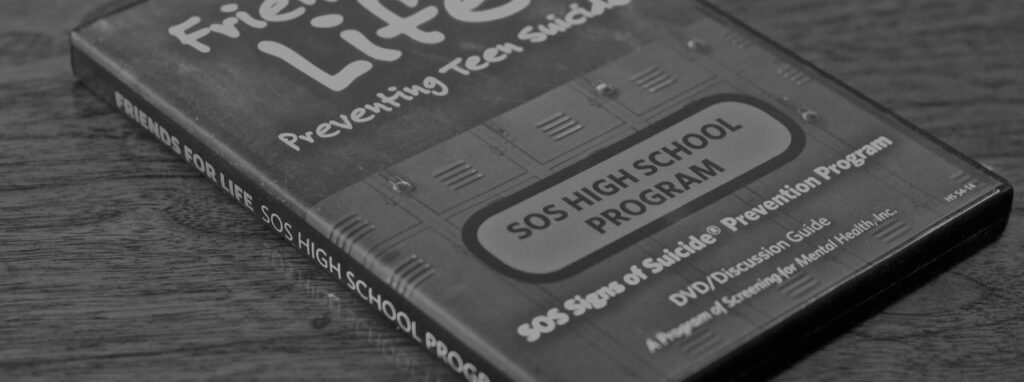
The SOS program demonstrates measurable impact on youth suicide prevention outcomes. Research studies have documented reductions in suicide attempts among students participating in SOS compared to control groups. Additional positive outcomes include increased knowledge about depression and suicide, improved attitudes toward help-seeking, and greater likelihood of telling adults about peers showing warning signs.
These research findings validate SOS as evidence-based youth prevention practice worthy of widespread implementation. Schools can track local outcomes including screening participation rates, number of at-risk students identified, referral completion rates, and student feedback about program value. This data informs continuous improvement while demonstrating program impact to stakeholders and funders.
The SOS Signs of Suicide program transforms schools into suicide-safer environments where mental health receives appropriate attention, students possess knowledge and skills to support themselves and peers, and clear systems exist for connecting struggling youth with help. As a cornerstone youth prevention program, SOS saves lives while building foundations for lifelong mental wellness among American youth.

FEATURED PROGRAMS
SOS Second Act is designed to build resiliency in young adults. In addition to reviewing the signs and symptoms of depression and suicidality, students are prompted to discuss substance abuse and other risky behaviors. Students are provided with a solid foundation on health care basics, health insurance, and self-care tips on seeking mental health treatment in the “real world.”
The Online Parent Brief Screen for Adolescent Depression (BSAD) allows parents to assess their child for suicide or depression risk factors. After parents complete a series of questions online, the screening provides results, local referral options (determined by each school), and relevant, educational information.